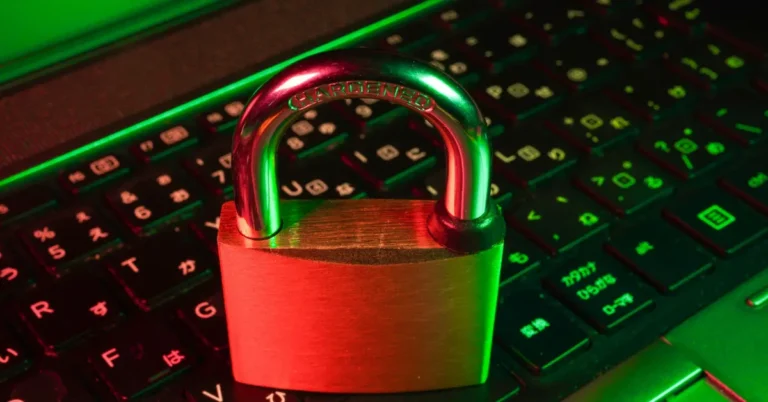
Cryptography Quantum
Imagine a world where every lock, every password, and every digital vault can be cracked open in seconds. It sounds like the plot of a cyber-thriller, but in the realm of cryptography quantum, this scenario is becoming more realistic by the day. As quantum computers advance, they pose both an existential threat and an incredible opportunity for cybersecurity. In this article, we’ll explore how cryptography quantum is reshaping the digital world and what it means for the future of secure communication.
What is Cryptography Quantum?
To understand the impact of cryptography quantum, let’s start with the basics. Traditional cryptography relies on complex mathematical problems that classical computers struggle to solve. These include factorizing large numbers or solving discrete logarithm problems, which form the foundation of encryption protocols like RSA and ECC.
Quantum cryptography, on the other hand, leverages the principles of quantum mechanics such as superposition and entanglement to create encryption methods that are theoretically unbreakable. While this sounds like science fiction, real-world applications are already emerging, and the implications are profound.
Why Are Quantum Computers a Threat to Encryption?
Today’s encryption methods are based on problems that classical computers take an impractically long time to solve. However, quantum computers, thanks to algorithms like Shor’s algorithm, can crack these encryptions exponentially faster.
For example, RSA encryption, which protects everything from online banking to government secrets, relies on the difficulty of factoring large prime numbers. A classical computer would need thousands of years to break it, but a sufficiently powerful quantum computer could do it in mere hours. This raises a pressing question: How can we secure our digital world against this emerging quantum threat?
Post-Quantum Cryptography: The Race to Stay Ahead
As quantum computing continues to evolve, researchers are developing new cryptographic techniques designed to withstand quantum attacks. This field, known as post-quantum cryptography, focuses on creating encryption methods that remain secure even when quantum computers reach full capability.
Some promising approaches include lattice-based cryptography, which uses complex geometric structures, making it resistant to quantum decryption. Another approach is code-based cryptography, which relies on error-correcting codes that quantum algorithms struggle to solve. Multivariate polynomial cryptography is another alternative, building security on the difficulty of solving multivariate equations, a problem quantum computers haven’t yet mastered. These methods are currently being evaluated by organizations like the National Institute of Standards and Technology (NIST) to determine the future standard of secure communication.
Quantum Key Distribution: Unhackable Encryption?
While post-quantum cryptography focuses on creating new algorithms, quantum key distribution (QKD) takes a different approach by using quantum mechanics itself to create secure communication channels. QKD leverages the principle of quantum entanglement to transmit encryption keys. If an eavesdropper tries to intercept the key, the quantum state of the particles changes, alerting both parties to the breach. This makes QKD theoretically unhackable and has already been tested in real-world applications, including secure government communications and financial transactions.
Real-World Applications of Cryptography Quantum
Quantum cryptography isn’t just an academic concept. It is already being deployed in industries where security is paramount. In banking and finance, it plays a crucial role in protecting financial transactions from quantum cyber threats. Government and military sectors are using it to secure classified communications against future decryption attempts. The healthcare industry benefits from quantum cryptography by ensuring the privacy of medical records and sensitive patient data. Telecommunications companies are exploring its potential for creating unbreakable encryption for digital communication networks.
The Challenges of Implementing Quantum Cryptography
Despite its promise, cryptography quantum faces several challenges. One of the primary concerns is scalability. Quantum cryptographic systems are currently expensive and complex to implement on a large scale. Another challenge is the integration with existing systems, as transitioning from classical to quantum-resistant cryptography requires significant infrastructure changes. Standardization is also a crucial factor. While organizations like NIST are working on standardizing quantum-safe encryption, global adoption will take time.
Preparing for the Quantum Future
While fully operational quantum computers may still be years away, the transition to quantum-safe encryption must begin now. Businesses and governments must assess their cryptographic vulnerabilities by identifying systems that rely on encryption methods vulnerable to quantum attacks. Adopting hybrid cryptographic solutions can serve as a transitional phase, where organizations implement a mix of classical and post-quantum cryptography. Staying informed about standardization efforts is crucial to ensuring future compliance with emerging encryption standards. Investing in quantum research and development will help businesses and cybersecurity experts integrate quantum-resistant solutions early.
A Quantum Leap for Cybersecurity
The rise of quantum computing presents both a challenge and an opportunity for cybersecurity. While traditional encryption methods face obsolescence, cryptography quantum offers new ways to secure digital communication. The shift won’t happen overnight, but by preparing today, we can ensure a safer digital future for tomorrow. As we move forward, one thing is clear: the future of encryption is quantum, and the race to stay ahead has already begun.