Quantum Computer
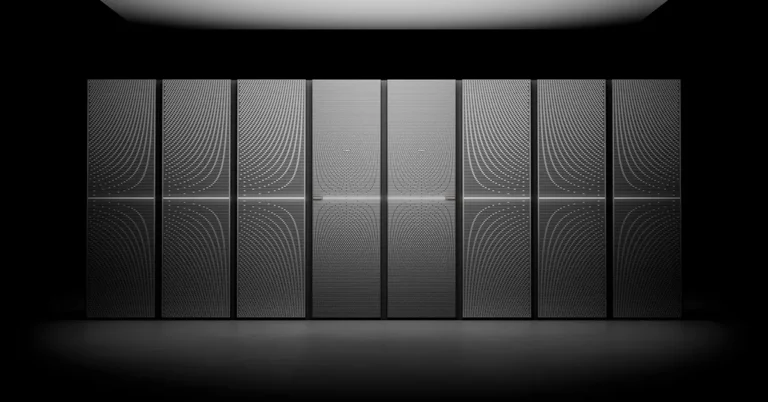
Image Credit: IonQ
Imagine waking up in a world where the most complex problems—those that would take classical computers thousands of years to solve—are cracked in mere seconds. A world where medicine is revolutionized, artificial intelligence becomes smarter than ever, and cryptographic systems are rewritten. This isn’t the plot of a sci-fi movie; it’s the reality that quantum computers are shaping.
Quantum computing has the potential to redefine industries, challenge our understanding of computation, and even change the course of technological evolution. But what exactly is a quantum computer? How does it work? And, more importantly, how will it impact our future?
Let’s dive deep into the world of quantum computing and explore why it’s one of the most exciting advancements of our time.
What Exactly is a Quantum Computer?
To understand quantum computing, it helps to first compare it to the computers we use today. Traditional computers, or classical computers, operate using bits as the smallest unit of data. A bit is either a 0 or a 1, forming the binary code that underlies all modern computing.
Quantum computers, on the other hand, introduce a revolutionary concept: quantum bits, or qubits. Unlike classical bits, qubits can exist in multiple states at once due to a phenomenon known as superposition. This means that instead of simply being a 0 or a 1, a qubit can be both 0 and 1 simultaneously.
But that’s just the beginning. Quantum computing also leverages another fundamental principle of quantum mechanics: entanglement. This allows qubits to become interconnected, meaning the state of one qubit directly influences the state of another, no matter the distance between them. This property makes quantum computers exponentially more powerful than classical ones.
How Does Superposition Work?
Imagine you’re flipping a coin. In classical computing, the coin is either heads (0) or tails (1) when it lands. In quantum computing, however, the coin is spinning in the air and represents both heads and tails at the same time—until it’s measured. This is superposition in action.
What About Entanglement?
Picture two quantum coins that, once entangled, always land on the same side—no matter how far apart they are. If you measure one and it lands on heads, the other will instantly land on heads as well. This bizarre property of quantum mechanics is what makes quantum computers so powerful.
Why Are Quantum Computers Such a Big Deal?
Quantum computing isn’t just an incremental improvement over classical computing; it represents an entirely new way of processing information. By taking advantage of quantum mechanics, these machines can solve problems that are practically impossible for traditional computers. Here’s why that matters:
Breaking Modern Cryptography
Most encryption methods today rely on the difficulty of factoring large numbers—a task that classical computers struggle with. A sufficiently advanced quantum computer could break RSA encryption (the standard security protocol for the internet) within minutes. This has significant implications for cybersecurity, financial systems, and even national security.
Revolutionizing Drug Discovery
Pharmaceutical companies spend billions on research and development, often taking years to discover new drugs. Quantum computers can simulate molecular interactions at an atomic level, drastically accelerating the drug discovery process. This could lead to new treatments for diseases like cancer, Alzheimer’s, and even viruses.
Optimizing Logistics and Supply Chains
From airline scheduling to traffic management, many industries rely on complex optimization models. Quantum computers can analyze millions of variables simultaneously, leading to more efficient routing, reduced costs, and better overall logistics management.
Enhancing Artificial Intelligence and Machine Learning
AI and machine learning rely on vast amounts of data processing. Quantum computing could significantly speed up training algorithms, making AI systems more powerful, responsive, and accurate. This could lead to advancements in self-driving cars, medical diagnostics, and even language processing.
Climate Modeling and Energy Solutions
Climate change is one of the biggest challenges of our time, and predicting weather patterns is incredibly complex. Quantum computers can simulate atmospheric changes in ways that classical computers cannot, helping scientists develop more accurate climate models and new solutions for renewable energy.
The Race for Quantum Supremacy
Governments, tech giants, and research institutions around the world are in a heated race to achieve quantum supremacy—the moment when a quantum computer performs a calculation that is infeasible for even the most powerful supercomputer.
Key Players in Quantum Computing
- Google: In 2019, Google claimed quantum supremacy with their Sycamore processor, solving a problem in 200 seconds that would take classical computers 10,000 years.
- IBM: IBM has been a major player in making quantum computing accessible, launching cloud-based quantum computing services.
- Microsoft: Microsoft is developing quantum software and research into topological qubits, a more stable form of quantum computing.
- China: China has been investing heavily in quantum research, launching the world’s first quantum satellite in 2016.
The Most Recent Breakthroughs
In December 2024, Google introduced a quantum computing chip named Willow, a groundbreaking technology capable of performing calculations in five minutes that would take classical supercomputers over 10 septillion years (a timeframe longer than the age of the universe). This milestone has pushed the boundaries of what quantum computers can achieve.
Challenges That Quantum Computing Must Overcome
Despite its promise, quantum computing faces several obstacles before it can reach mainstream adoption.
Qubit Stability and Decoherence
Qubits are incredibly fragile. Any disturbance from the environment (such as temperature fluctuations or electromagnetic waves) can cause decoherence, which means the qubit loses its quantum state. Keeping qubits stable long enough for meaningful computation is a massive challenge.
Error Correction
Quantum computers are highly prone to errors due to the nature of quantum mechanics. Scientists are actively developing quantum error correction techniques, but achieving error-free quantum computing is still a work in progress.
Scalability
Currently, quantum computers operate with tens or hundreds of qubits, but truly powerful quantum computing will require millions of stable qubits. Building large-scale quantum systems is still an engineering challenge.
The Future of Quantum Computing
As quantum computing continues to evolve, what can we expect in the coming years?
Hybrid Quantum-Classical Computing
In the near future, quantum computers will likely work alongside classical computers rather than completely replacing them. This hybrid model will allow businesses to solve highly complex problems while maintaining the reliability of classical systems.
Quantum Cloud Computing
Major quantum computing companies like IBM, Microsoft, and Google are already offering cloud-based quantum computing services, allowing businesses and researchers to access quantum computing power remotely.
Quantum AI and Next-Generation Machine Learning
As quantum computing continues to advance, it will supercharge AI and machine learning models, leading to major breakthroughs in natural language processing, pattern recognition, and decision-making systems.
Commercial Quantum Computing
While currently only accessible to large research institutions, quantum computers may become commercially viable within the next 10-20 years. Companies investing in quantum computing now may have a competitive edge in the future.
The Quantum Revolution is Just Beginning
Quantum computing is one of the most exciting technological frontiers of our time. From shattering encryption to revolutionizing medicine, it has the potential to reshape entire industries and solve problems once thought impossible. While challenges remain, research and innovation are progressing rapidly.
The question is no longer “if” quantum computing will change the world, but rather “when” and “how”. As we stand on the brink of this quantum revolution, one thing is clear: the future of computing is no longer binary.